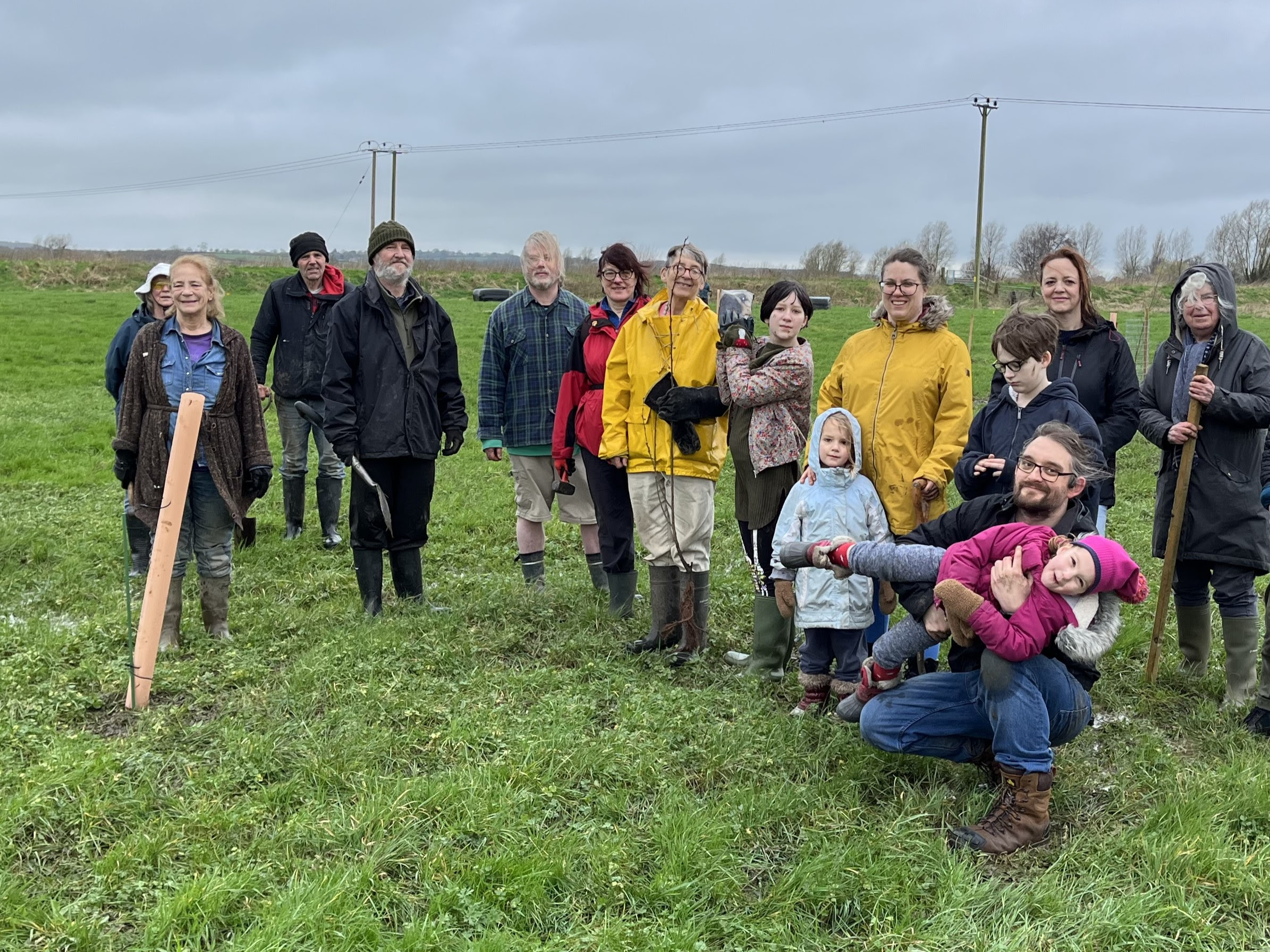
Shaping The Future
The greater part of the money designated for land work from the Town Deal Fund will be spent this year on the creation of ponds. Areas that hold water for longer than the current areas of flood water that drain. These ponds may still dry out in the dryest time of the year and are known as seasonal ponds, a natural and crucial wildlife habitat.
Many plants and animals have become adapted to life in ponds and rely on this type of habitat to survive. Ponds support two thirds of all freshwater species, and creating clean new ponds is one of the simplest and most effective ways to protect freshwater wildlife. The loss of farm ponds largely caused the historic drop in Great Crested Newt numbers.
Naturally the landscape we live in would have provided large areas of standing water. Thankfully we still have areas of standing water spreading across Westhay Moor, Avalon Marshes, Ham Wall and Sharpham, creating some standing water corridors, they help prevent interbreeding and create genetic diversity. We can play our part in extending this area closer to Glastonbury. Creating ponds close to other waterbodies and wetlands, provides easy stepping-stones that help aquatic plants and animals move around the landscape. If you are interested in more information online look up Freshwater Habitat Trust.
Somerset Wildlife Trust continue to be our partner in this project until the end of 2025. Simon Clarke (Head of Nature Recovery SWT) overseeing the project and finding additional funds. Guy Braga (Wilder Communities Officer SWT), assisted with our initial tree planting project and a brilliant example of how to run a group and pull together what’s needed (equipment etc,); and for now we have Nicky Hodges (Species Survival Fund Project Coordinator SWT), working closely with me, helping with aspects of the project too time consuming for me to do on a voluntary bases and providing advice and expert third parties from SWT.
Our latest volunteer opportunity was to spread yellow rattle seed in pre prepared scraped ground. Unfortunately, weather prevented scraping the larger area designated for wild flower seeding but a handful of us were able to seed the smaller area. An opportunity to sow yellow rattle for more volunteers will be held in the summer, after the hay is cut.
Our earlier land event was a tutorial on scythe use and the correct ways of setting up and sharpening a scythe. Delivered by the very experienced Larry Leventhal. Although it was a rainy day, intrepid scythers had a very enjoyable day and cleared around the cherry trees. This event was inspired by Susannah Clemence who came to me with a vision to create a group of volunteer scythers to make themselves available to different projects. They have since returned to the site to finish scything along the track. Susannah also assisted in creating the event with Larry. Thank you, Susannah.
We plan to have a similar event next year.
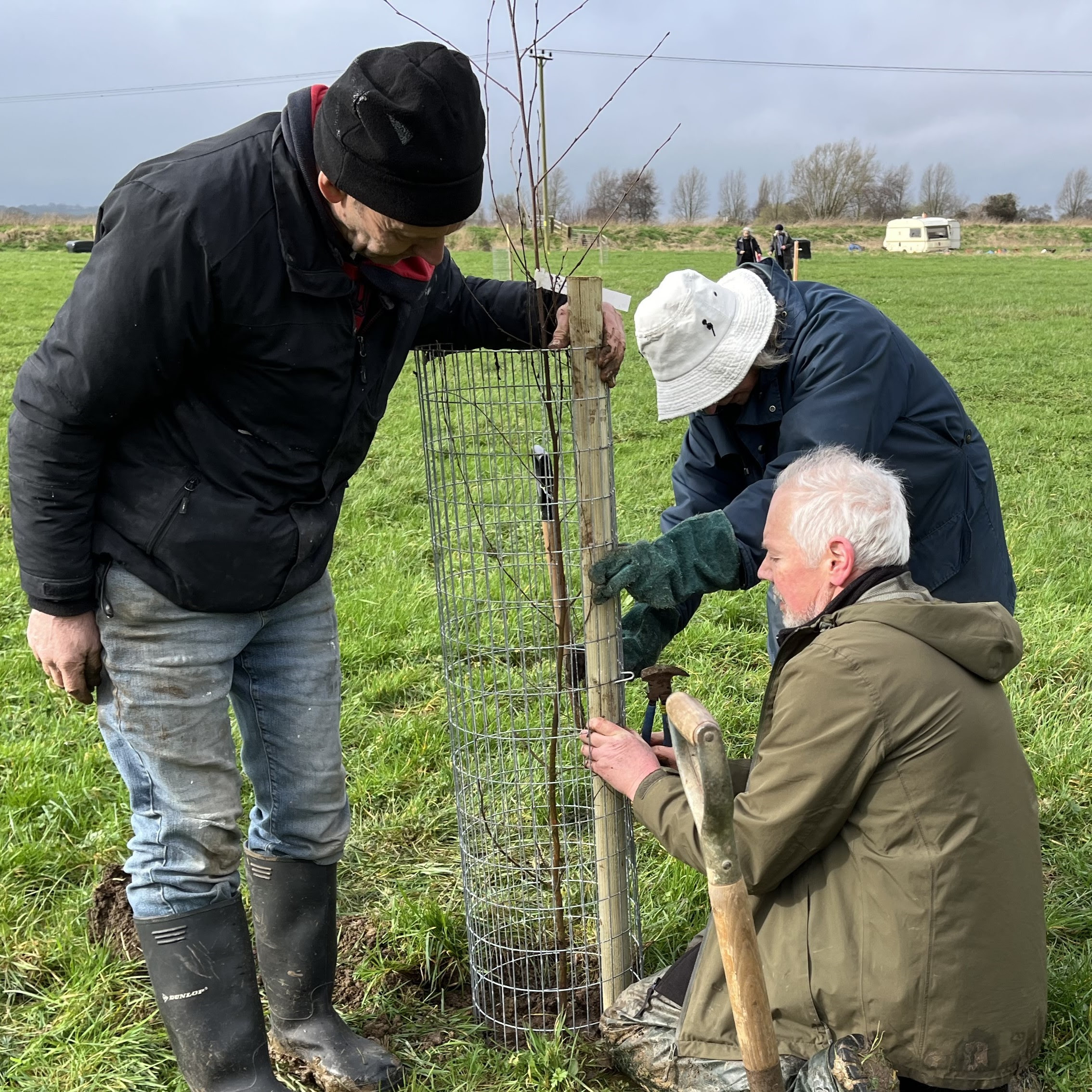
Thank you also Peter Francis for monthly maintenance jobs; and for being with me for voluntary care of the trees already planted and to help to move some of them from an area that we have since decided to seed with yellow rattle, to prepare for wildflower meadow. Thank you also Stoker for offering to modify your tractor for scrapes for sowing the yellow rattle.
We are planning more events and volunteering opportunities so if you are interested, keep an eye on our Facebook page or look for us on glastonburylandvolunteers.co.uk(local land-based events and volunteering opportunities calendar).
It is such beautiful land. I was down there the other day checking tree guards during sunset, with rivers of starlings flying over my head and small birds on the margins of the flooded areas. It was because of our Friends support that we have been able to get this far and it will be through your support that we will be able to continue to manage the site for wildlife into the future. Thank you.
Miranda (Land Manager)
A crucial part of pond creation is conducting a professional hydrological survey to gain a thorough understanding of the site’s water dynamics. This study is essential for designing the site’s ecological improvements and ensuring the long-term management of the habitats, as water plays a significant role in the ecology of the site, bordered by the River Brue, with most of the land below river level.
The study will investigate water flow across the site, seasonal water level fluctuations, land topography, and sources of pollution. Hydrological modelling will offer guidance on what is possible on site and, as appropriate, how best to adjust water levels in ditches for wetland habitat creation. The study findings will inform the plans for physical works, support any consent applications needed to make changes close to the River Brue and help in discussions with neighbouring landowners regarding the potential impacts where there are shared boundaries.
Nicky Hodges (Somerset Wildlife Trust).
Nicky Hodges has been a valuable member of our team and we will miss her when she leaves us after January. She is moving forward to a fulltime role as Ranger with Bristol City Council. Her position with us as Species Survival Fund Project Coordinator has been re-advertised.